
The GC 2000 gas chromatograph, independently developed by EXPEC Technology—a subsidiary incubated under Focused Photonics (Hangzhou), Inc. (FPI)—has been successfully deployed across a wide range of fields, including food safety, pharmaceuticals, petrochemicals, and judicial science. Powered by cutting-edge technologies such as electronic pressure/flow control and high-precision independent temperature control, the instrument delivers stable and reliable analytical performance, providing solid technical support for laboratories across various industries.
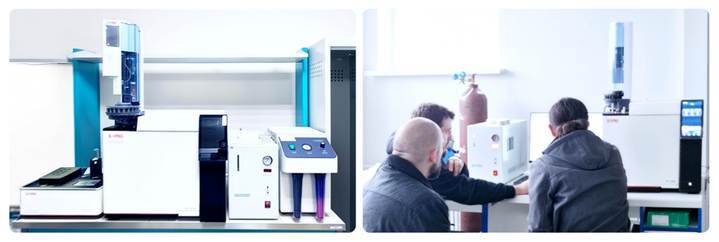
In the field of food safety, the GC 2000 provides a reliable technical solution to common challenges in the testing of edible oils, agricultural products, and foodstuffs, including complex matrices, multiple component groups, and interfering substances. At a laboratory in Europe, the instrument has been tasked with on-site edible oil testing, covering key indicators such as vegetable oil composition, solvent residues, waxes, sterols, and mineral oil hydrocarbons. At the laboratory of Universidad de Talca in Chile, the GC 2000 is used for the analysis of fatty acid methyl esters (FAMEs) and the detection of pesticide residues in agricultural products and food. In China, the instrument has been successfully applied to pesticide residue testing at authoritative institutions, including the Institute of Plant Protection of the Chinese Academy of Agricultural Sciences. With its ultra-stable liquid injection port, high-precision electronic pressure controller (EPC), world-class column oven, user-friendly workstation software, and support for simultaneous configuration of multiple detectors, the GC 2000 fully meets the food industry's demanding requirements for extensive testing portfolios, high accuracy, and long-term stable operation.
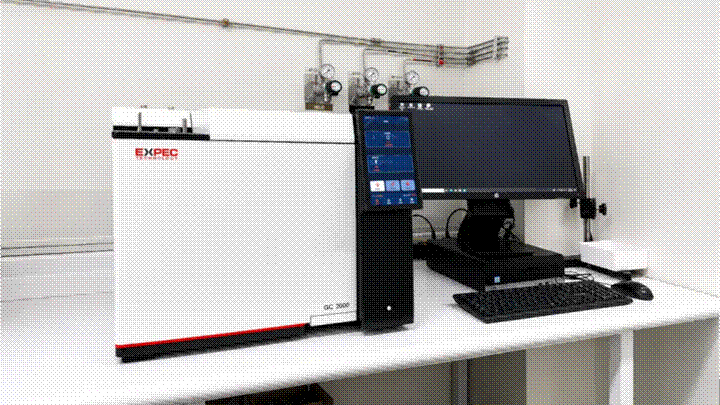
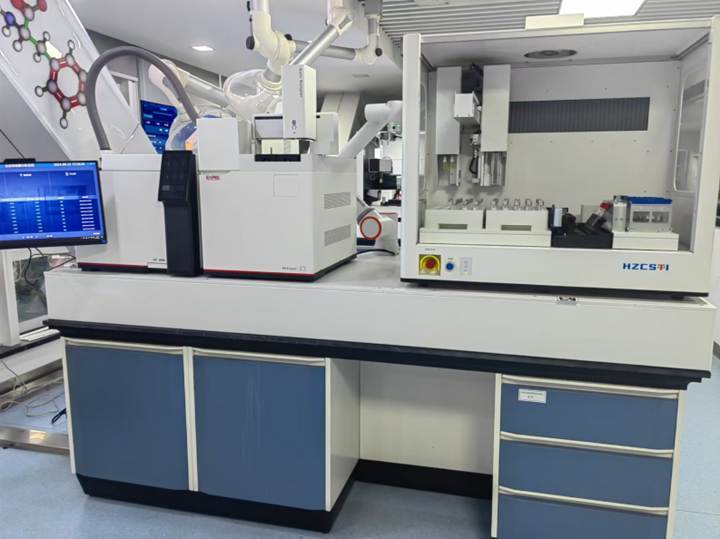
In the pharmaceutical field, to address method validation and standardized application for residual solvent testing in drugs, the GC 2000, paired with a self-developed autosampler, has been employed by China Pharmaceutical University to establish an HS-GC system. The system has successfully completed basic performance testing and is being used for pharmacopoeial method validation, covering the detection of various components including pesticide residues and drug substances. In response to the stringent requirements of pharmacopoeial method validation, the system features an injection port option with a permanently ultra-inert surface treatment, enabling it to handle strongly adsorptive and corrosive samples with ease. The core EPC component is made of ruby, achieving pressure control precision of up to 0.001 psi. It supports temperature programming with up to 32 ramps/33 platforms and can accommodate up to four detectors operating simultaneously. Test results show that all key performance indicators of the system have reached the same performance tier as internationally renowned brands.
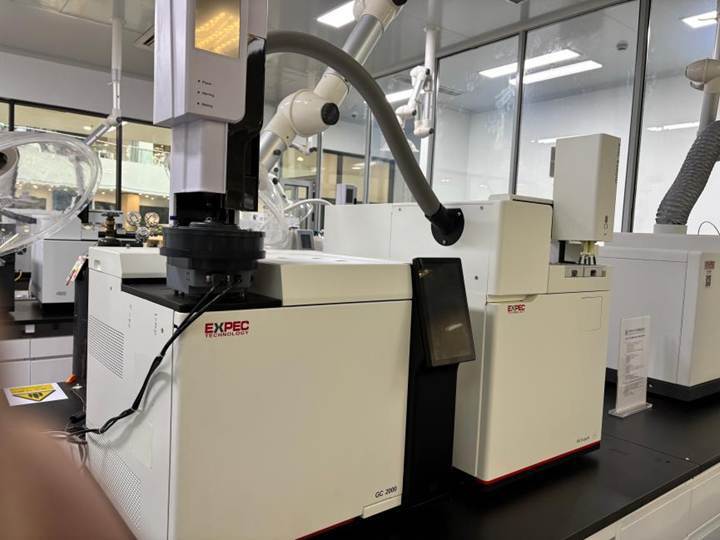
In the petrochemical sector, to solve the challenge of accurately detecting trace impurities in high-purity gases, the GC 2000, equipped with a self-developed pulsed discharge helium ionization detector (PDHID), has been successfully applied to a high-purity gas impurity analysis project at a coal chemical company in China. The valve-based flow-path solution adopted in this project is capable of analyzing multiple high-purity gases, including high-purity hydrogen, oxygen, argon, helium, and nitrogen, and holds broad application prospects across industries such as industrial gases, hydrogen energy fuels, and hydrogen refueling stations. To meet the stringent demands of trace-level detection limits, diverse gas types, and high analytical accuracy, the GC 2000 employs advanced electronic pressure/flow control and high-precision independent temperature control technologies to ensure stable and reliable results. Leveraging mature automated pneumatic valve switching and a sophisticated multi-valve, multi-column separation system, it achieves complete separation of multi-component gases, while the porous heat-dissipating column oven enables rapid oven temperature equilibration, significantly reducing analysis time. The project has now been successfully delivered, providing the customer with a reliable analytical solution and data support.
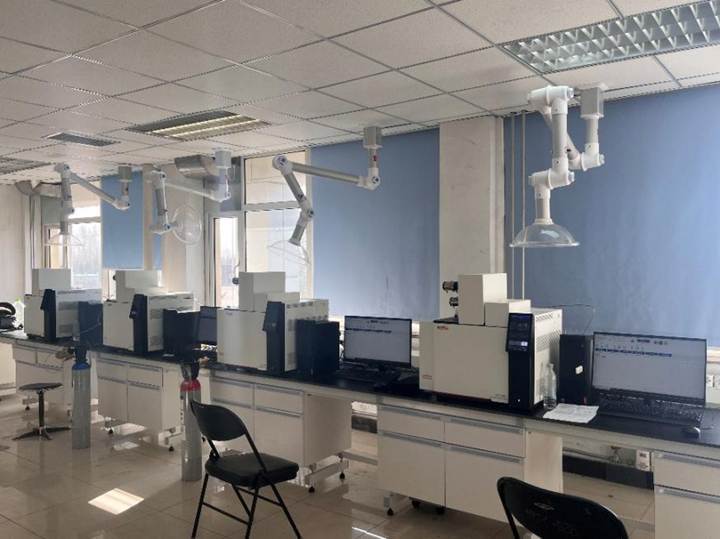
In the judicial field, the GC 2000, combined with a self-developed autosampler, has been integrated into a fully automated blood alcohol testing system, which has been successfully implemented at a public security bureau in China as part of a "lights-out laboratory." The system enables automated detection of ethanol content in blood, providing reliable technical support for drunk-driving enforcement. In response to challenges such as automation of the testing workflow and stable system operation, the GC 2000 offers intelligent functions including self-diagnostics, leak self-checking, automatic carrier gas preservation, and automatic reminders, allowing users to easily monitor instrument status and quickly troubleshoot issues. With its advanced analytical performance and user-friendly operational experience, the system streamlines workflows and enhances efficiency. The automated and intelligent working mechanism of this system has attracted widespread attention within the industry and has further strengthened the solid and extensive partnership between the company and its customers.
In addition, the GC 2000 is equally well suited for NMHC analysis, VOCs analysis, and pesticide residue testing in vegetables, fruits, and other foods, making it a trusted partner and expert choice for professional applications. (By Li Nan)